
Experimental design and methodological approaches used to assess the potential of essential oils in wound healing
DOI:
https://doi.org/10.69998/qk3c3t74Keywords:
Wound healing, Essential oils, Methods, Approaches, in vivo, in vitroAbstract
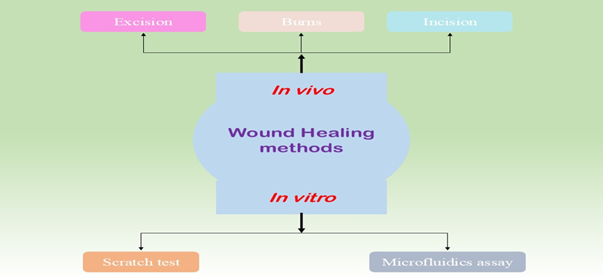
Wound healing (WH) remains a complex clinical challenge, driving the search for effective therapeutic alternatives such as essential oils (EOs) derived from medicinal plants. However, the reliability and translational relevance of findings in this field are highly dependent on the methodological approaches used to assess EO efficacy. Diverse in vitro and in vivo models, alongside varying experimental protocols, have been employed, often leading to inconsistent or non-comparable outcomes. In this review, we critically examine these methodologies, highlighting their strengths, limitations, and impact on interpreting WH activity. By emphasizing the need for standardized and robust evaluation strategies, we aim to guide future research toward more reliable and reproducible assessments of EOs in wound healing. Furthermore, some details on the WH process and the chemistry of EOs are provided. To gather relevant data, several databases were utilized, including Google Scholar, ScienceDirect, Web of Science, Scopus, and PubMed. The literature revealed that many test are used in vivo and in vivo to assess the WH effect of EOs, including Incision, excision, burns, scratch and microfluidic assay. Other tests such as human model are not usually employed for EOs but there are some on data on plants extracts. Interestingly, this review provides some significant discussing on the approaches used to evaluate the WH activity of EOs and can be taking as a strong scientific basic for the future research in this field.
Downloads
References
Abelan, U.S., de Oliveira, A.C., Cacoci, É.S.P., Martins, T.E.A., Giacon, V.M., Velasco, M.V.R., Lima, C.R.R. de C., 2022. Potential use of essential oils in cosmetic and dermatological hair products: A review. J Cosmet Dermatol 21, 1407–1418. https://doi.org/10.1111/jocd.14286
Agour, A., Mssillou, I., Mechchate, H., Es-safi, I., Allali, A., Barnossi, A.E., Al Kamaly, O., Alshawwa, S.Z., El Moussaoui, A., Bari, A., Lyoussi, B., Derwich, E., 2022. Brocchia cinerea (Delile) Vis. Essential Oil Antimicrobial Activity and Crop Protection against Cowpea Weevil Callosobruchus maculatus (Fab.). Plants 11, 583. https://doi.org/10.3390/plants11050583
Agyare, C., Boakye, Y.D., Bekoe, E.O., Hensel, A., Dapaah, S.O., Appiah, T., 2016. Review: African medicinal plants with wound healing properties. J Ethnopharmacol 177, 85–100. https://doi.org/10.1016/j.jep.2015.11.008
Almoshari, Y., 2022. Medicinal plants used for dermatological disorders among the people of the kingdom of Saudi Arabia: A narrative review. Saudi Journal of Biological Sciences 29, 103303. https://doi.org/10.1016/j.sjbs.2022.103303
Alves, L.G.S., Vila Nova, B.G., Assunção, R.G., da Silva, L.C.T., Sá, G.C., Silva, L. dos S., Silva, M.A., de Santana, A.V.S., de Jesus, T.R., Lucena, F.R.C., da Silva, M.A. dos S., da Silva, L.C.N., Serra, I.C.P.B., Abreu, A.G., 2024. Melaleuca alternifolia essential oil in a natural product-based formulation: Antimicrobial and healing effects in Staphylococcus aureus-infected wounds. European Journal of Pharmaceutics and Biopharmaceutics 202, 114416. https://doi.org/10.1016/j.ejpb.2024.114416
Amrati, F.E.-Z., Slighoua, M., Mssillou, I., Chebaibi, M., Galvão de Azevedo, R., Boukhira, S., Moslova, K., Al Kamaly, O., Saleh, A., Correa de Oliveira, A., Gomes, A. de F., Soares Pontes, G., Bousta, D., 2023. Lipids Fraction from Caralluma europaea (Guss.): MicroTOF and HPLC Analyses and Exploration of Its Antioxidant, Cytotoxic, Anti-Inflammatory, and Wound Healing Effects. Separations 10, 172. https://doi.org/10.3390/separations10030172
Andjić, M., Božin, B., Draginić, N., Kočović, A., Jeremić, J.N., Tomović, M., Milojević Šamanović, A., Kladar, N., Čapo, I., Jakovljević, V., Bradić, J.V., 2021. Formulation and Evaluation of Helichrysum italicum Essential Oil-Based Topical Formulations for Wound Healing in Diabetic Rats. Pharmaceuticals 14, 813. https://doi.org/10.3390/ph14080813
Andjić, M., Draginić, N., Kočović, A., Jeremić, J., Vučićević, K., Jeremić, N., Krstonošić, V., Božin, B., Kladar, N., Čapo, I., Andrijević, L., Pecarski, D., Bolevich, S., Jakovljević, V., Bradić, J., 2022. Immortelle essential oil-based ointment improves wound healing in a diabetic rat model. Biomedicine & Pharmacotherapy 150, 112941. https://doi.org/10.1016/j.biopha.2022.112941
Annabi, N., Tamayol, A., Shin, S.R., Ghaemmaghami, A.M., Peppas, N.A., Khademhosseini, A., 2014. Surgical materials: Current challenges and nano-enabled solutions. Nano Today 9, 574–589. https://doi.org/10.1016/j.nantod.2014.09.006
Ansell, D.M., Campbell, L., Thomason, H.A., Brass, A., Hardman, M.J., 2014. A statistical analysis of murine incisional and excisional acute wound models. Wound Repair and Regeneration 22, 281–287. https://doi.org/10.1111/wrr.12148
Arora, P., Shiveena, B., Garg, M., Kumari, S., Goyal, A., 2022. Curative Potency of Medicinal Plants in Management of Eczema: A Conservative Approach. Phytomedicine Plus 2, 100256. https://doi.org/10.1016/j.phyplu.2022.100256
Atkinson, R.G., 2018. Phenylpropenes: Occurrence, Distribution, and Biosynthesis in Fruit. J. Agric. Food Chem. 66, 2259–2272. https://doi.org/10.1021/acs.jafc.6b04696
Avola, R., Granata, G., Geraci, C., Napoli, E., Graziano, A.C.E., Cardile, V., 2020a. Oregano (Origanum vulgare L.) essential oil provides anti-inflammatory activity and facilitates wound healing in a human keratinocytes cell model. Food and Chemical Toxicology 144, 111586. https://doi.org/10.1016/j.fct.2020.111586
Avola, R., Granata, G., Geraci, C., Napoli, E., Graziano, A.C.E., Cardile, V., 2020b. Oregano (Origanum vulgare L.) essential oil provides anti-inflammatory activity and facilitates wound healing in a human keratinocytes cell model. Food Chem Toxicol 144, 111586. https://doi.org/10.1016/j.fct.2020.111586
Ayaz, M., Sadiq, A., Junaid, M., Ullah, F., Subhan, F., Ahmed, J., 2017. Neuroprotective and Anti-Aging Potentials of Essential Oils from Aromatic and Medicinal Plants. Front Aging Neurosci 9, 168. https://doi.org/10.3389/fnagi.2017.00168
Bahadori, M.B., Maggi, F., Zengin, G., Asghari, B., Eskandani, M., 2020. Essential oils of hedgenettles (Stachys inflata, S. lavandulifolia, and S. byzantina) have antioxidant, anti-Alzheimer, antidiabetic, and anti-obesity potential: A comparative study. Industrial Crops and Products 145, 112089. https://doi.org/10.1016/j.indcrop.2020.112089
Biggs, L.C., Kim, C.S., Miroshnikova, Y.A., Wickström, S.A., 2020. Mechanical Forces in the Skin: Roles in Tissue Architecture, Stability, and Function. Journal of Investigative Dermatology 140, 284–290. https://doi.org/10.1016/j.jid.2019.06.137
Boukhatem, M.N., Chader, H., Houche, A., Oudjida, F., Benkebaili, F., Hakim, Y., 2021a. Topical Emulsion Containing Lavandula stoechas Essential Oil as a Therapeutic Agent for Cutaneous Wound Healing. J 4, 288–307. https://doi.org/10.3390/j4030023
Boukhatem, M.N., Chader, H., Houche, A., Oudjida, F., Benkebaili, F., Hakim, Y., 2021b. Topical Emulsion Containing Lavandula stoechas Essential Oil as a Therapeutic Agent for Cutaneous Wound Healing. J 4, 288–307. https://doi.org/10.3390/j4030023
Bouyahya, A., Lagrouh, F., El Omari, N., Bourais, I., El Jemli, M., Marmouzi, I., Salhi, N., Faouzi, M.E.A., Belmehdi, O., Dakka, N., Bakri, Y., 2020. Essential oils of Mentha viridis rich phenolic compounds show important antioxidant, antidiabetic, dermatoprotective, antidermatophyte and antibacterial properties. Biocatalysis and Agricultural Biotechnology 23, 101471. https://doi.org/10.1016/j.bcab.2019.101471
Caliari-Oliveira, C., Yaochite, J.N.U., Ramalho, L.N.Z., Palma, P.V.B., Carlos, D., De Queiróz Cunha, F., De Souza, D.A., Frade, M.A.C., Covas, D.T., Malmegrim, K.C.R., Oliveira, M.C., César Voltarelli, J., 2016. Xenogeneic Mesenchymal Stromal Cells Improve Wound Healing and Modulate the Immune Response in an Extensive Burn Model. Cell Transplant 25, 201–215. https://doi.org/10.3727/096368915X688128
Cariddi, L., Escobar, F., Moser, M., Panero, A., Alaniz, F., Zygadlo, J., Sabini, L., Maldonado, A., 2011. Monoterpenes isolated from Minthostachys verticillata (Griseb.) Epling essential oil modulates immediate-type hypersensitivity responses in vitro and in vivo. Planta Med 77, 1687–1694. https://doi.org/10.1055/s-0030-1271090
Contant, C., Rouabhia, M., Loubaki, L., Chandad, F., Semlali, A., 2021. Anethole induces anti-oral cancer activity by triggering apoptosis, autophagy and oxidative stress and by modulation of multiple signaling pathways. Sci Rep 11, 13087. https://doi.org/10.1038/s41598-021-92456-w
Costa, M.F., Durço, A.O., Rabelo, T.K., Barreto, R. de S.S., Guimarães, A.G., 2019. Effects of Carvacrol, Thymol and essential oils containing such monoterpenes on wound healing: a systematic review. J Pharm Pharmacol 71, 141–155. https://doi.org/10.1111/jphp.13054
Dajic Stevanovic, Z., Sieniawska, E., Glowniak, K., Obradovic, N., Pajic-Lijakovic, I., 2020. Natural Macromolecules as Carriers for Essential Oils: From Extraction to Biomedical Application. Front Bioeng Biotechnol 8, 563. https://doi.org/10.3389/fbioe.2020.00563
de Assis, K.M.A., da Silva Leite, J.M., de Melo, D.F., Borges, J.C., Santana, L.M.B., Dos Reis, M.M.L., Moreira, V.M., da Rocha, W.R.V., Catão, R.M.R., Dos Santos, S.G., da Silva Portela, A., de Sousa Silva, S.M., de Oliveira, T.K.B., de Souza da Silveira, J.W., Pires, E.G., Nonaka, C.F.W., Sanches, F.A.C., de Lima Damasceno, B.P.G., 2020. Bicontinuous microemulsions containing Melaleuca alternifolia essential oil as a therapeutic agent for cutaneous wound healing. Drug Deliv Transl Res 10, 1748–1763. https://doi.org/10.1007/s13346-020-00850-0
Dykes, P.J., Heggie, R., Hill, S.A., 2001. Effects of adhesive dressings on the stratum corneum of the skin. J Wound Care 10, 7–10. https://doi.org/10.12968/jowc.2001.10.2.26054
Eid, A.M., Hawash, M., 2021. Biological evaluation of Safrole oil and Safrole oil Nanoemulgel as antioxidant, antidiabetic, antibacterial, antifungal and anticancer. BMC Complement Med Ther 21, 159. https://doi.org/10.1186/s12906-021-03324-z
El Abdali, Y., Beniaich, G., Mahraz, A.M., El Moussaoui, A., Bin Jardan, Y.A., Akhazzane, M., Chebaibi, M., Nafidi, H.-A., Eloutassi, N., Bourhia, M., Bouia, A., 2023. Antibacterial, Antioxidant, and in silico NADPH Oxidase Inhibition Studies of Essential Oils of Lavandula dentata against Foodborne Pathogens. Evidence-Based Complementary and Alternative Medicine 2023, e9766002. https://doi.org/10.1155/2023/9766002
Elnahas, R.A., Elwakil, B.H., Elshewemi, S.S., Olama, Z.A., 2021. Egyptian Olea europaea leaves bioactive extract: Antibacterial and wound healing activity in normal and diabetic rats. Journal of Traditional and Complementary Medicine 11, 427–434. https://doi.org/10.1016/j.jtcme.2021.02.008
El-Tarabily, K.A., El-Saadony, M.T., Alagawany, M., Arif, M., Batiha, G.E., Khafaga, A.F., Elwan, H.A.M., Elnesr, S.S., E. Abd El-Hack, M., 2021. Using essential oils to overcome bacterial biofilm formation and their antimicrobial resistance. Saudi Journal of Biological Sciences 28, 5145–5156. https://doi.org/10.1016/j.sjbs.2021.05.033
Falleh, H., Ben Jemaa, M., Saada, M., Ksouri, R., 2020. Essential oils: A promising eco-friendly food preservative. Food Chem 330, 127268. https://doi.org/10.1016/j.foodchem.2020.127268
Farahpour, M.R., Pirkhezr, E., Ashrafian, A., Sonboli, A., 2020. Accelerated healing by topical administration of Salvia officinalis essential oil on Pseudomonas aeruginosa and Staphylococcus aureus infected wound model. Biomed Pharmacother 128, 110120. https://doi.org/10.1016/j.biopha.2020.110120
Friedrich, E.E., Niknam-Bienia, S., Xie, P., Jia, S.-X., Hong, S.J., Mustoe, T.A., Galiano, R.D., 2017. Thermal injury model in the rabbit ear with quantifiable burn progression and hypertrophic scar. Wound Repair and Regeneration 25, 327–337. https://doi.org/10.1111/wrr.12518
Fronza, M., Heinzmann, B., Hamburger, M., Laufer, S., Merfort, I., 2009. Determination of the wound healing effect of Calendula extracts using the scratch assay with 3T3 fibroblasts. Journal of Ethnopharmacology 126, 463–467. https://doi.org/10.1016/j.jep.2009.09.014
Gál, P., Toporcer, T., Vidinský, B., Hudák, R., Zivcák, J., Sabo, J., 2009. Simple interrupted percutaneous suture versus intradermal running suture for wound tensile strength measurement in rats: a technical note. Eur Surg Res 43, 61–65. https://doi.org/10.1159/000219214
Galiano, R.D., Michaels, J., V., Dobryansky, M., Levine, J.P., Gurtner, G.C., 2004. Quantitative and reproducible murine model of excisional wound healing. Wound Repair and Regeneration 12, 485–492. https://doi.org/10.1111/j.1067-1927.2004.12404.x
Gautam, N., Mantha, A.K., Mittal, S., 2014. Essential oils and their constituents as anticancer agents: a mechanistic view. Biomed Res Int 2014, 154106. https://doi.org/10.1155/2014/154106
Geer, D.J., Swartz, D.D., Andreadis, S.T., 2004. In vivo model of wound healing based on transplanted tissue-engineered skin. Tissue Eng 10, 1006–1017. https://doi.org/10.1089/ten.2004.10.1006
Goetsch, K.P., Niesler, C.U., 2011. Optimization of the scratch assay for in vitro skeletal muscle wound healing analysis. Analytical Biochemistry 411, 158–160. https://doi.org/10.1016/j.ab.2010.12.012
Gottrup, F., Agren, M.S., Karlsmark, T., 2000. Models for use in wound healing research: a survey focusing on in vitro and in vivo adult soft tissue. Wound Repair Regen 8, 83–96. https://doi.org/10.1046/j.1524-475x.2000.00083.x
Guo, B., Dong, R., Liang, Y., Li, M., 2021. Haemostatic materials for wound healing applications. Nat Rev Chem 5, 773–791. https://doi.org/10.1038/s41570-021-00323-z
Gurtner, G.C., Werner, S., Barrandon, Y., Longaker, M.T., 2008. Wound repair and regeneration. Nature 453, 314–321. https://doi.org/10.1038/nature07039
Halldorsson, S., Lucumi, E., Gómez-Sjöberg, R., Fleming, R.M.T., 2015. Advantages and challenges of microfluidic cell culture in polydimethylsiloxane devices. Biosensors and Bioelectronics 63, 218–231. https://doi.org/10.1016/j.bios.2014.07.029
Hasatsri, S., Aramwit, P., 2017. Nontraditional Methods to Evaluate Wound Healing. Dermatologic Surgery 43, 342. https://doi.org/10.1097/DSS.0000000000000957
Heidari, R., Assadollahi, V., Shakib Manesh, M.H., Mirzaei, S.A., Elahian, F., 2024. Recent advances in mesoporous silica nanoparticles formulations and drug delivery for wound healing. International Journal of Pharmaceutics 665, 124654. https://doi.org/10.1016/j.ijpharm.2024.124654
Huang, Q., Chen, Y., Ye, M., Zhuang, S., Zhong, A., Liu, J., Maduraiveeran, G., Peng, Y., Huang, Y., 2024. Metal-organic framework-based dressings: Application and opportunities in wound healing. Materials Today Chemistry 40, 102235. https://doi.org/10.1016/j.mtchem.2024.102235
Jabeen, F., Khursheed, N., Ahmad, R., Rasool, S., Ali, A., Ganie, S.A., 2024. Chapter 2 - Crosstalk of multiomics approaches with medicinal plants of therapeutic importance, in: Ali, A., Rehman, M.U., Ahmad, S.B., Arafah, A. (Eds.), Biological Insights of Multi-Omics Technologies in Human Diseases. Academic Press, pp. 21–51. https://doi.org/10.1016/B978-0-443-23971-7.00002-X
Januszyk, M., Wong, V.W., Bhatt, K.A., Vial, I.N., Paterno, J., Longaker, M.T., Gurtner, G.C., 2014. Mechanical offloading of incisional wounds is associated with transcriptional downregulation of inflammatory pathways in a large animal model. Organogenesis 10, 186–193. https://doi.org/10.4161/org.28818
Javed Ahamad, Subasini Uthirapathy, Muath Sh. Mohammed Ameen, Esra T. Anwer, 2019. Essential Oil Composition and Antidiabetic, Anticancer Activity of Rosmarinus officinalis L. Leaves from Erbil (Iraq). Journal of essential oil-bearing plants 22, 1544–1553. https://doi.org/10.1080/0972060X.2019.1689179
Kandimalla, R., Kalita, S., Choudhury, B., Dash, S., Kalita, K., Kotoky, J., 2016. Chemical Composition and Anti-Candidiasis Mediated Wound Healing Property of Cymbopogon nardus Essential Oil on Chronic Diabetic Wounds. Frontiers in Pharmacology 7.
Kumar, V., Khan, A., Nagarajan, K., 2013. ANIMAL MODELS FOR THE EVALUATION OF WOUND HEALING ACTIVITY. International Bulletin of Drug Research 3, 93–107.
Liang, C.-C., Park, A.Y., Guan, J.-L., 2007. In vitro scratch assay: a convenient and inexpensive method for analysis of cell migration in vitro. Nat Protoc 2, 329–333. https://doi.org/10.1038/nprot.2007.30
Lorigooini, Z., Jamshidi-kia, F., Dodman, S., 2020. Chapter 8 - Analysis of sesquiterpenes and sesquiterpenoids, in: Sanches Silva, A., Nabavi, S.F., Saeedi, M., Nabavi, S.M. (Eds.), Recent Advances in Natural Products Analysis. Elsevier, pp. 289–312. https://doi.org/10.1016/B978-0-12-816455-6.00008-1
Low, J.S., Mak, K.-K., Zhang, S., Pichika, M.R., Marappan, P., Mohandas, K., Balijepalli, M.K., 2021a. In vitro methods used for discovering plant derived products as wound healing agents – An update on the cell types and rationale. Fitoterapia 154, 105026. https://doi.org/10.1016/j.fitote.2021.105026
Low, J.S., Mak, K.-K., Zhang, S., Pichika, M.R., Marappan, P., Mohandas, K., Balijepalli, M.K., 2021b. In vitro methods used for discovering plant derived products as wound healing agents – An update on the cell types and rationale. Fitoterapia 154, 105026. https://doi.org/10.1016/j.fitote.2021.105026
Masson-Meyers, D.S., Andrade, T.A.M., Caetano, G.F., Guimaraes, F.R., Leite, M.N., Leite, S.N., Frade, M.A.C., 2020. Experimental models and methods for cutaneous wound healing assessment. Int J Exp Pathol 101, 21–37. https://doi.org/10.1111/iep.12346
Masyita, A., Mustika Sari, R., Dwi Astuti, A., Yasir, B., Rahma Rumata, N., Emran, T.B., Nainu, F., Simal-Gandara, J., 2022. Terpenes and terpenoids as main bioactive compounds of essential oils, their roles in human health and potential application as natural food preservatives. Food Chem X 13, 100217. https://doi.org/10.1016/j.fochx.2022.100217
Meng, N., Zhou, C., Sun, Z., Chen, X., Xiong, S., Tao, M., Qin, Y., Hu, K., Ma, L., Tian, D., Zhu, F., Yang, Y., 2024. Tailored gelatin methacryloyl-based hydrogel with near-infrared responsive delivery of Qiai essential oils boosting reactive oxygen species scavenging, antimicrobial, and anti-inflammatory activities for diabetic wound healing. International Journal of Biological Macromolecules 263, 130386. https://doi.org/10.1016/j.ijbiomac.2024.130386
Mohammed, H.A., Qureshi, K.A., Ali, H.M., Al-Omar, M.S., Khan, O., Mohammed, S.A.A., 2022. Bio-Evaluation of the Wound Healing Activity of Artemisia judaica L. as Part of the Plant’s Use in Traditional Medicine; Phytochemical, Antioxidant, Anti-Inflammatory, and Antibiofilm Properties of the Plant’s Essential Oils. Antioxidants 11, 332. https://doi.org/10.3390/antiox11020332
Molinie, N., Gautreau, A., 2018. Directional Collective Migration in Wound Healing Assays, in: Gautreau, A. (Ed.), Cell Migration: Methods and Protocols, Methods in Molecular Biology. Springer, New York, NY, pp. 11–19. https://doi.org/10.1007/978-1-4939-7701-7_2
Montenegro, L., Pasquinucci, L., Zappalà, A., Chiechio, S., Turnaturi, R., Parenti, C., 2017. Rosemary Essential Oil-Loaded Lipid Nanoparticles: In Vivo Topical Activity from Gel Vehicles. Pharmaceutics 9, 48. https://doi.org/10.3390/pharmaceutics9040048
Mssillou, I., Agour, A., El Ghouizi, A., Hamamouch, N., Lyoussi, B., Derwich, E., 2020. Chemical Composition, Antioxidant Activity, and Antifungal Effects of Essential Oil from Laurus nobilis L. Flowers Growing in Morocco. Journal of Food Quality 2020, e8819311. https://doi.org/10.1155/2020/8819311
Mssillou, I., Bakour, M., Slighoua, M., Laaroussi, H., Saghrouchni, H., Ez-Zahra Amrati, F., Lyoussi, B., Derwich, E., 2022. Investigation on wound healing effect of Mediterranean medicinal plants and some related phenolic compounds: A review. Journal of Ethnopharmacology 298, 115663. https://doi.org/10.1016/j.jep.2022.115663
Nagappan, T., Segaran, T.C., Wahid, M.E.A., Ramasamy, P., Vairappan, C.S., 2012. Efficacy of Carbazole Alkaloids, Essential Oil and Extract of Murraya koenigii in Enhancing Subcutaneous Wound Healing in Rats. Molecules 17, 14449–14463. https://doi.org/10.3390/molecules171214449
Nauta, A.C., Gurtner, G.C., Longaker, M.T., 2013. Adult stem cells in small animal wound healing models. Methods Mol Biol 1037, 81–98. https://doi.org/10.1007/978-1-62703-505-7_5
Ninkuu, V., Zhang, L., Yan, J., Fu, Z., Yang, T., Zeng, H., 2021. Biochemistry of Terpenes and Recent Advances in Plant Protection. Int J Mol Sci 22, 5710. https://doi.org/10.3390/ijms22115710
Nosrati, H., Khodaei, M., Alizadeh, Z., Banitalebi-Dehkordi, M., 2021. Cationic, anionic and neutral polysaccharides for skin tissue engineering and wound healing applications. International Journal of Biological Macromolecules 192, 298–322. https://doi.org/10.1016/j.ijbiomac.2021.10.013
Oh, J.Y., Park, M.A., Kim, Y.C., 2014. Peppermint Oil Promotes Hair Growth without Toxic Signs. Toxicol Res 30, 297–304. https://doi.org/10.5487/TR.2014.30.4.297
Pandey, A.K., Kumar, P., Singh, P., Tripathi, N.N., Bajpai, V.K., 2017. Essential Oils: Sources of Antimicrobials and Food Preservatives. Front Microbiol 7, 2161. https://doi.org/10.3389/fmicb.2016.02161
Pérez-Recalde, M., Ruiz Arias, I.E., Hermida, É.B., 2018. Could essential oils enhance biopolymers performance for wound healing? A systematic review. Phytomedicine 38, 57–65. https://doi.org/10.1016/j.phymed.2017.09.024
Petkovic, M., Sørensen, A.E., Leal, E.C., Carvalho, E., Dalgaard, L.T., 2020. Mechanistic Actions of microRNAs in Diabetic Wound Healing. Cells 9, 2228. https://doi.org/10.3390/cells9102228
Rajivgandhi, G., Saravanan, K., Ramachandran, G., Li, J.-L., Yin, L., Quero, F., Alharbi, N.S., Kadaikunnan, S., Khaled, J.M., Manoharan, N., Li, W.-J., 2020. Enhanced anti-cancer activity of chitosan loaded Morinda citrifolia essential oil against A549 human lung cancer cells. Int J Biol Macromol 164, 4010–4021. https://doi.org/10.1016/j.ijbiomac.2020.08.169
Raut, J.S., Karuppayil, S.M., 2014. A status review on the medicinal properties of essential oils. Industrial Crops and Products 62, 250–264. https://doi.org/10.1016/j.indcrop.2014.05.055
Salas-Oropeza, J., Jimenez-Estrada, M., Perez-Torres, A., Castell-Rodriguez, A.E., Becerril-Millan, R., Rodriguez-Monroy, M.A., Canales-Martinez, M.M., 2020. Wound Healing Activity of the Essential Oil of Bursera morelensis, in Mice. Molecules 25, 1795. https://doi.org/10.3390/molecules25081795
Sami, D.G., Heiba, H.H., Abdellatif, A., 2019. Wound healing models: A systematic review of animal and non-animal models. Wound Medicine 24, 8–17. https://doi.org/10.1016/j.wndm.2018.12.001
Samuelson, R., Lobl, M., Higgins, S., Clarey, D., Wysong, A., 2020. The Effects of Lavender Essential Oil on Wound Healing: A Review of the Current Evidence. J Altern Complement Med 26, 680–690. https://doi.org/10.1089/acm.2019.0286
Sarkic, A., Stappen, I., 2018. Essential Oils and Their Single Compounds in Cosmetics—A Critical Review. Cosmetics 5, 11. https://doi.org/10.3390/cosmetics5010011
Schagen, J., Sly, P.D., Fantino, E., 2018. Characterizing well-differentiated culture of primary human nasal epithelial cells for use in wound healing assays. Laboratory Investigation 98, 1478–1486. https://doi.org/10.1038/s41374-018-0100-1
Seyed Ahmadi, S.G., Farahpour, M.R., Hamishehkar, H., 2019. Topical application of Cinnamon verum essential oil accelerates infected wound healing process by increasing tissue antioxidant capacity and keratin biosynthesis. The Kaohsiung Journal of Medical Sciences 35, 686–694. https://doi.org/10.1002/kjm2.12120
Sharifi-Rad, J., Sureda, A., Tenore, G.C., Daglia, M., Sharifi-Rad, Mehdi, Valussi, M., Tundis, R., Sharifi-Rad, Marzieh, Loizzo, M.R., Ademiluyi, A.O., Sharifi-Rad, R., Ayatollahi, S.A., Iriti, M., 2017a. Biological Activities of Essential Oils: From Plant Chemoecology to Traditional Healing Systems. Molecules 22, 70. https://doi.org/10.3390/molecules22010070
Sharifi-Rad, J., Sureda, A., Tenore, G.C., Daglia, M., Sharifi-Rad, Mehdi, Valussi, M., Tundis, R., Sharifi-Rad, Marzieh, Loizzo, M.R., Ademiluyi, A.O., Sharifi-Rad, R., Ayatollahi, S.A., Iriti, M., 2017b. Biological Activities of Essential Oils: From Plant Chemoecology to Traditional Healing Systems. Molecules 22, 70. https://doi.org/10.3390/molecules22010070
Sihoglu Tepe, A., Ozaslan, M., 2020. Anti-Alzheimer, anti-diabetic, skin-whitening, and antioxidant activities of the essential oil of Cinnamomum zeylanicum. Industrial Crops and Products 145, 112069. https://doi.org/10.1016/j.indcrop.2019.112069
Silori, G.K., Kushwaha, N., Kumar, V., 2019. Essential Oils from Pines: Chemistry and Applications, in: Malik, S. (Ed.), Essential Oil Research: Trends in Biosynthesis, Analytics, Industrial Applications and Biotechnological Production. Springer International Publishing, Cham, pp. 275–297. https://doi.org/10.1007/978-3-030-16546-8_10
Sim, L.Y., Abd Rani, N.Z., Husain, K., 2019. Lamiaceae: An Insight on Their Anti-Allergic Potential and Its Mechanisms of Action. Front Pharmacol 10, 677. https://doi.org/10.3389/fphar.2019.00677
Stamm, A., Reimers, K., Strauß, S., Vogt, P., Scheper, T., Pepelanova, I., 2016. In vitro wound healing assays – state of the art. BioNanoMaterials 17, 79–87. https://doi.org/10.1515/bnm-2016-0002
Stephens, P., Caley, M., Peake, M., 2013. Alternatives for animal wound model systems. Methods Mol Biol 1037, 177–201. https://doi.org/10.1007/978-1-62703-505-7_10
Tiwari, B.K., Tynsong, H., Rani, S., 2004. MEDICINAL, FOOD AND AROMATIC PLANTS | Medicinal Plants and Human Health, in: Burley, J. (Ed.), Encyclopedia of Forest Sciences. Elsevier, Oxford, pp. 515–523. https://doi.org/10.1016/B0-12-145160-7/00256-8
Tiwari, R., Pathak, K., 2023. Local Drug Delivery Strategies towards Wound Healing. Pharmaceutics 15, 634. https://doi.org/10.3390/pharmaceutics15020634
Tran, G.-B., Le, N.-T.T., Dam, S.-M., 2018. Potential Use of Essential Oil Isolated from Cleistocalyx operculatus Leaves as a Topical Dermatological Agent for Treatment of Burn Wound. Dermatology Research and Practice 2018, 2730169. https://doi.org/10.1155/2018/2730169
Vega Gomez, M.C., Rolón, M., Coronel, C., Pereira Carneiro, J.N., Lucas dos Santos, A.T., Almeida-Bezerra, J.W., Almeida de Menezes, S., Everson da Silva, L., Melo Coutinho, H.D., do Amaral, W., Ribeiro-Filho, J., Bezerra Morais-Braga, M.F., 2021. Antiparasitic effect of essential oils obtained from two species of Piper L. native to the Atlantic forest. Biocatalysis and Agricultural Biotechnology 32, 101958. https://doi.org/10.1016/j.bcab.2021.101958
Walter, A.S., Volkmer, E., Gauglitz, G., Böcker, W., Saller, M.M., 2023. Systematic review of molecular pathways in burn wound healing. Burns. https://doi.org/10.1016/j.burns.2023.03.006
Wang, H., Xu, Z., Zhao, M., Liu, G., Wu, J., 2021. Advances of hydrogel dressings in diabetic wounds. Biomater. Sci. 9, 1530–1546. https://doi.org/10.1039/D0BM01747G
Wang, Y., Zhu, J., Chen, P., Li, Y., Yan, S., Wang, J., Du, W., Liu, B.-F., 2019. Wound-on-a-chip: High-throughput 3D wound healing assay with a novel SU-8 mesh chip. Sensors and Actuators B: Chemical 280, 86–93. https://doi.org/10.1016/j.snb.2018.10.050
Wilhelm, K.-P., Wilhelm, D., Bielfeldt, S., 2017. Models of wound healing: an emphasis on clinical studies. Skin Research and Technology 23, 3–12. https://doi.org/10.1111/srt.12317
Wong, V.W., Sorkin, M., Glotzbach, J.P., Longaker, M.T., Gurtner, G.C., 2011. Surgical approaches to create murine models of human wound healing. J Biomed Biotechnol 2011, 969618. https://doi.org/10.1155/2011/969618
Yang, Y., Zhong, S., Meng, F., Cui, X., 2024. Multi-Functional hydrogels to promote diabetic wound Healing: A review. Chemical Engineering Journal 497, 154855. https://doi.org/10.1016/j.cej.2024.154855
Yeshi, K., Wangchuk, P., 2022. Chapter 11 - Essential oils and their bioactive molecules in healthcare, in: Mandal, S.C., Nayak, A.K., Dhara, A.K. (Eds.), Herbal Biomolecules in Healthcare Applications. Academic Press, pp. 215–237. https://doi.org/10.1016/B978-0-323-85852-6.00006-8
Yousef, H., Alhajj, M., Fakoya, A.O., Sharma, S., 2024. Anatomy, Skin (Integument), Epidermis, in: StatPearls. StatPearls Publishing, Treasure Island (FL).
Zeng, R., Lin, Chuangqiang, Lin, Z., Chen, H., Lu, W., Lin, Changmin, Li, H., 2018. Approaches to cutaneous wound healing: basics and future directions. Cell Tissue Res 374, 217–232. https://doi.org/10.1007/s00441-018-2830-1
Downloads
Published
Data Availability Statement
Data will be available upon request from the corresponding author.
Issue
Section
License
Copyright (c) 2026 Hamza Saghrouchni (Author)

This work is licensed under a Creative Commons Attribution-NonCommercial-NoDerivatives 4.0 International License.


